Home
Flooring Systems
— Overview — Epoxy Coatings — Polyurethane Systems — PU Mortar & Heavy-Duty — Surface Preparation
Applications
— Industrial & Warehouse — Garage & Flake Flooring — Polyurethane Flooring — Cost Guide Our Process About Contact WhatsApp Us →
Heavy-Duty Resin Systems

Industrial Epoxy & Warehouse Flooring

Chemical-resistant, impact-rated industrial epoxy flooring for warehouses, factories and production floors in Gaborone and across Botswana that run under real load, every day.

Industrial Epoxy Flooring for
Continuous Operation

Industrial and warehouse floors take a different kind of punishment to a commercial showroom or office. Forklift traffic, pallet impact, chemical spillage, thermal shock from wash-down and constant abrasion all shorten the life of a floor that isn't specified correctly for the environment.

PourEpoxy installs heavy-duty resin flooring systems built for exactly this kind of use — specified against your actual operating conditions, not a generic coating chosen on price alone. Every system is installed by our Technical Finishes approved team, to written specification and manufacturer coverage rates.

  • Chemical-resistant screeds for acid and alkali exposure
  • High-build polyurethane for forklift and impact traffic
  • Self-levelling systems for large, continuous floor areas
  • Oil-tolerant priming for workshop and vehicle bay substrates
  • Full written specification and coverage-rate documentation
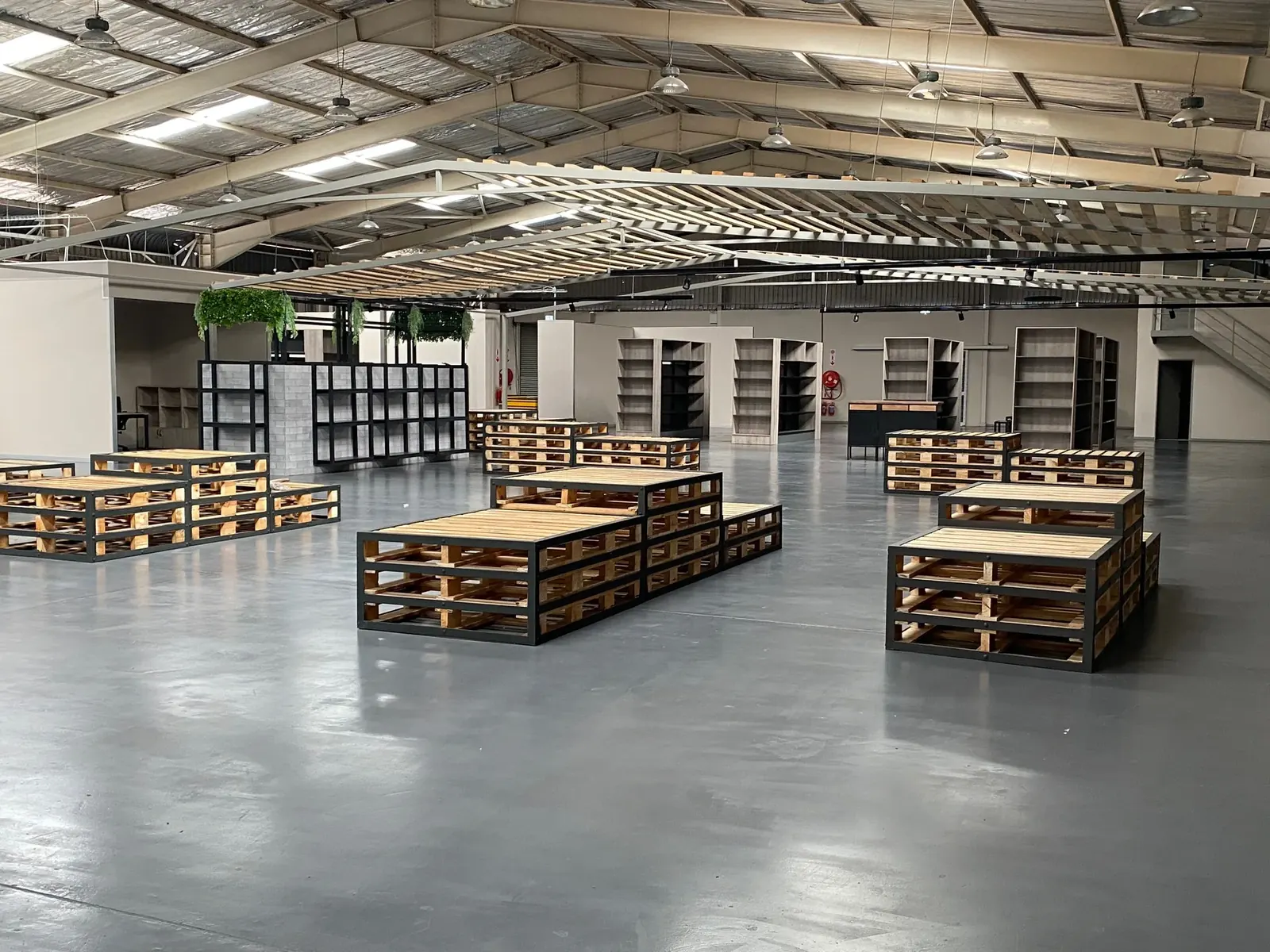
Industrial epoxy flooring installation Botswana
110 MPa
Compressive Strength — Heavy-Duty Screed
60%
Sulphuric Acid Resistance Rating
800 µm
High-Build PU Impact System Thickness
18 hrs
Full Cure — Heavy-Duty Chemical Screed

Specified For Your Environment

Heavy-Duty Chemical-Resistant Screeds

For environments with sustained acid, alkali or aggressive chemical exposure — mining, chemical processing, food and beverage production. Trowel-applied at 4.5mm, achieving compressive strength above 110 MPa with resistance to acid concentrations up to 60%. Full cure in as little as 18 hours, minimising production downtime.

High-Build Polyurethane Impact Systems

Solvent-free polyurethane flooring built for forklift traffic, pallet drop impact and constant abrasion. Roller-applied for lighter-duty areas or trowel-applied up to 800 micron film thickness where impact resistance is the priority — loading bays, high-traffic aisles and production floors.

Specialised Chemical-Resistant Epoxy

A high-performance epoxy system for the most demanding chemical exposure, applied at 1–3mm dry film thickness with a 3-day full cure. This is a specialised system installed strictly to manufacturer quality assurance requirements by our approved applicator team.

Polyurethane Screed Systems

Medium to heavy-duty PU screed for environments subject to thermal shock, wash-down and temperature cycling — commercial kitchens, production areas and cold chain facilities. Applied over the correct epoxy or PU primer for the substrate condition.

Where These Systems Are Used

Warehouses Distribution Centres Factories Production Floors Mining & Processing Loading Bays Vehicle Workshops Cold Storage
Large-area industrial floor preparation Botswana

Substrate Realities
On Large Floors

Industrial substrates come with their own set of problems: construction joints across large pours, contamination from oil, fuel or process chemicals, and slabs that were never finished to a coating-ready standard in the first place.

Where a substrate has been contaminated with oil or petroleum products — common in workshops and vehicle bays — we specify an oil-tolerant primer designed for direct application over contaminated concrete, rather than relying on standard primers that will fail to bond. Construction joints and slab movement are addressed at specification stage, not discovered after the floor is down.

  • Diamond grinding and shot blasting across large floor areas
  • Oil-tolerant priming for contaminated workshop substrates
  • Joint and crack assessment before system selection
  • Moisture testing appropriate to slab-on-grade construction

Choosing the Right
Screed Thickness

Polyurethane screeds are specified by thickness, and thickness is what decides how much thermal and mechanical punishment the floor will take. Specifying thinner to save on the initial cost is the most common error we see, and it usually shows itself at the first steam clean or the first dropped pallet.

System Thickness Service temperature Typical environment Coverage per kit
PolyScreed SL 2.5 mm −5 °C to 60 °C at 2 mm Light to medium traffic, dry production and packing areas 7.6 m² at 2.5 mm
PolyScreed MD 4 mm −15 °C to 90 °C at 4 mm Medium traffic, food and pharmaceutical production 5.3 m² at 4 mm
PolyScreed UT 5 mm −15 °C to 100 °C at 5 mm Wet process areas needing a textured, non-slip finish 4.2 m² at 5 mm
PolyScreed RT 6–8 mm −15 °C to 110 °C at 8 mm High traffic volume, rake and trowel applied 3.57 m² at 8 mm
PolyScreed HF 8–10 mm −40 °C to 110 °C Freezer rooms, thermal shock and high traffic volumes 3.24 m² at 10 mm

Figures are Technical Finishes’ published manufacturer data. We confirm the final specification against the current data sheet before quoting, as formulations and published figures are revised from time to time.

Across the range these screeds cure to a compressive strength above 50 MPa, a flexural strength above 20 MPa and a Shore D hardness of 80, take foot traffic at 12 to 16 hours and heavy traffic at 24 hours. All four are HACCP compliant and carry antimicrobial silver ion technology, which matters in food production areas.

The point worth taking from the table is that service temperature is a function of thickness, not just of product. PolyScreed MD handles 90 °C at 4 mm and 70 °C at 3 mm — the same material, a different specification. PolyScreed RT makes the same point again: 90 °C at 6 mm, 110 °C at 8 mm. If your cleaning regime involves steam or hot washdown, thickness is not the place to economise. If you are weighing epoxy against polyurethane for a particular area, the polyurethane flooring page sets out where each one belongs.

What We Check
Before Quoting

A price per square metre means very little until the substrate has been assessed. These are the five things that change the specification, and therefore the number.

Common Questions

How long before we can use the floor again?

For the polyurethane screeds above, the manufacturer gives foot traffic at 12 to 16 hours and heavy traffic at 24 hours, measured from the point of application at normal ambient temperatures. Lower temperatures extend that. Full chemical resistance develops over a longer period, so a washdown regime should not start on day one. The programme is set out at quotation stage against the actual system and the conditions on the day.

Can you install over an existing epoxy floor?

Sometimes, and it depends entirely on what is under it and how well it is still bonded. A sound, well-adhered existing coating can often be mechanically abraded and overcoated. One that is delaminating, contaminated or of unknown origin has to come off, because a new system is only as sound as the layer it is bonded to. This is assessed before quoting rather than assumed.

Does the whole facility have to close?

Usually not. Large floors are normally done in sections so that production continues in the areas that are not being worked on. What is needed is a sequence agreed in advance — which bays come out of service, in what order, and for how long — and physical separation between the working area and the rest of the building. Curing times are fixed, so the programme is built around them rather than compressed.

Do you need to test the slab first?

For anything of meaningful size, yes. Moisture content and surface tensile strength are the two that most often change a specification, and both are measurable. Testing before quotation is considerably cheaper than discovering the problem after the floor is down.

What is the difference between a coating and a screed?

A coating is applied at a few hundred microns and follows the profile of the slab beneath it — it protects the surface but does not rebuild it. A screed is applied at millimetres, carries load in its own right, and can correct surface profile and form falls. Warehouses with sound, level slabs are often well served by a coating; production floors subject to thermal shock, impact or aggressive cleaning generally need a screed.

Running a Facility That Needs the Right Floor?

Tell us about the environment — traffic type, chemical exposure, wash-down requirements and floor area — and we'll specify the correct system.